Getting Started

    Preventative Maintenance Checklist for Industrial Robot Arms

    A practical shop-floor guide detailing daily, monthly, and annual preventative maintenance routines for industrial robot arms.

    UR

    Risheek G

    8 July 20262 Min Read

    Preventative Maintenance Checklist for Industrial Robot Arms

    Implementing a structured preventative maintenance schedule is critical to preventing mechanical failure and avoiding unscheduled downtime, which can cost thousands of pounds per hour on high-throughput lines. A standard maintenance regime must include daily visual inspections of cables and oil seals, monthly back-up battery checks, and comprehensive annual services including grease analysis and belt tension calibrations.

    Daily Maintenance: Visual and Operational Checks

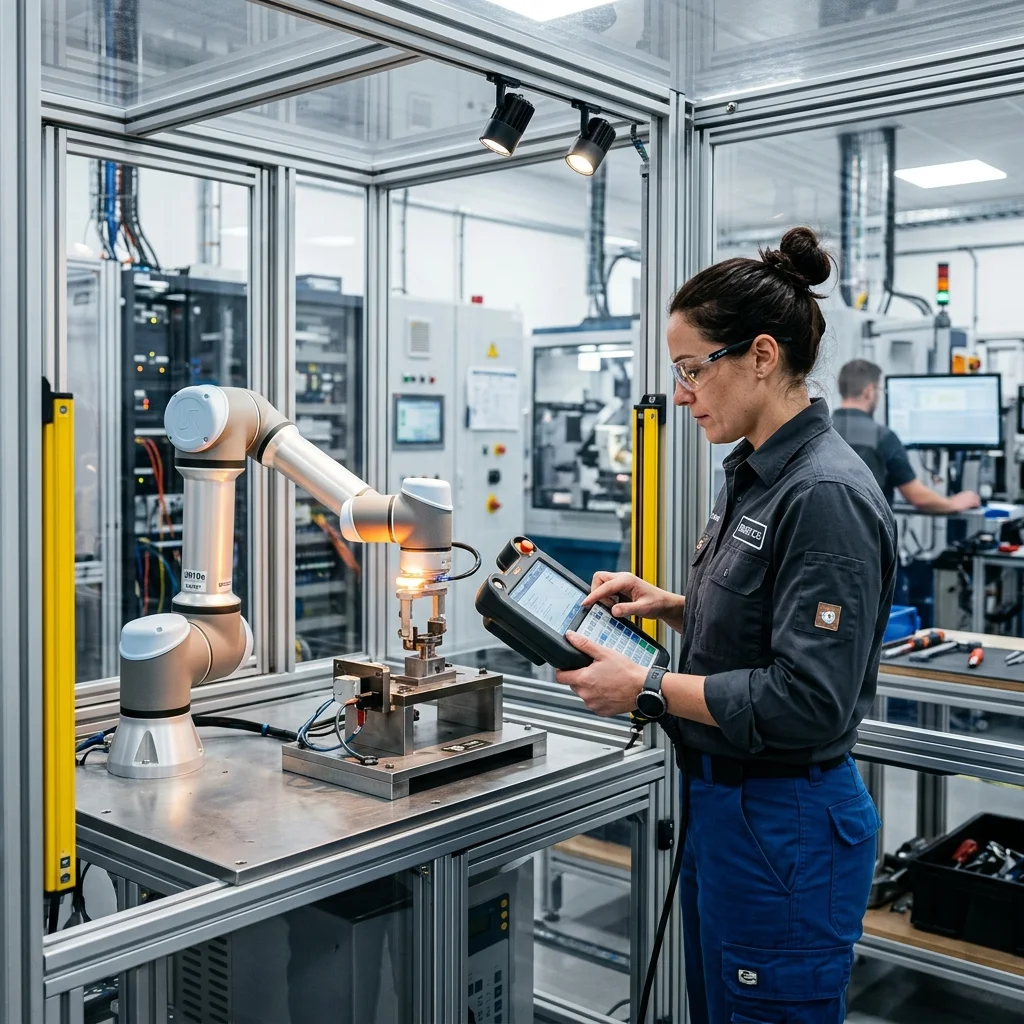
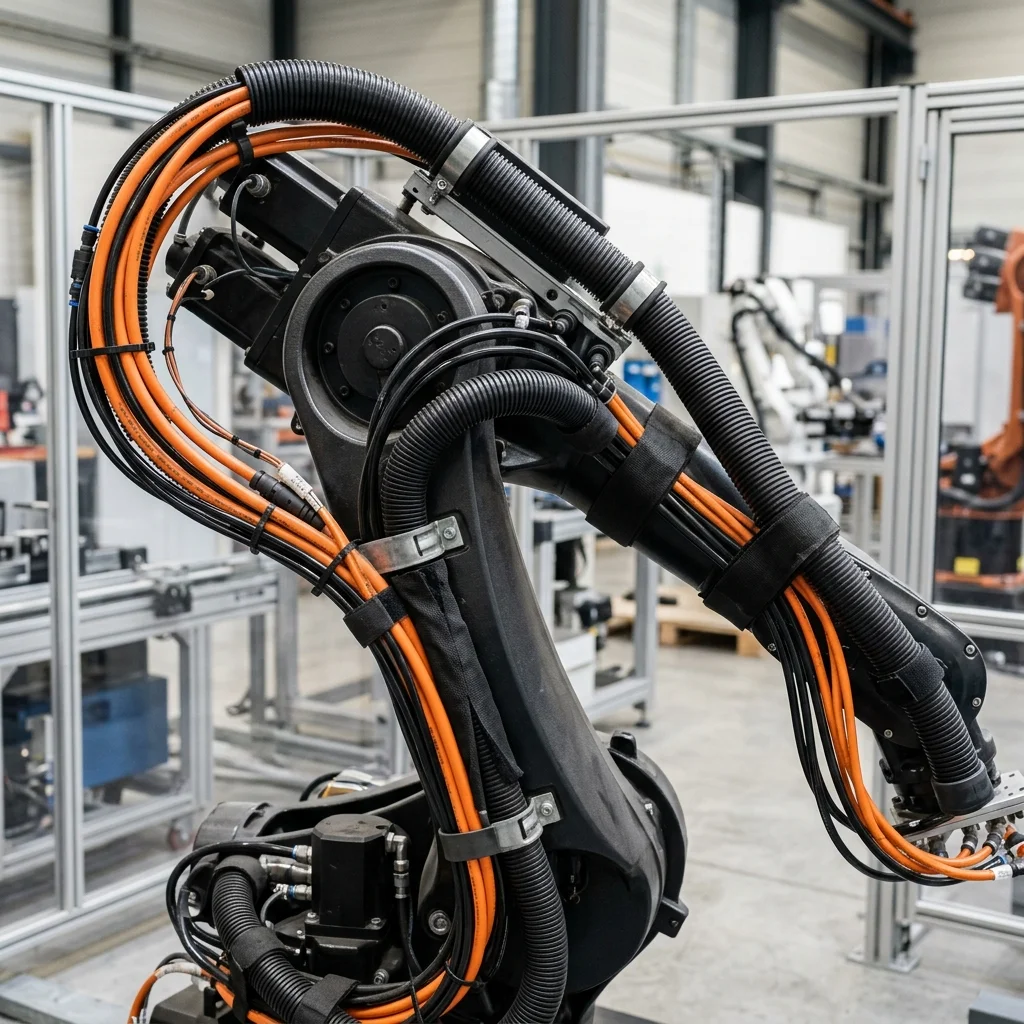
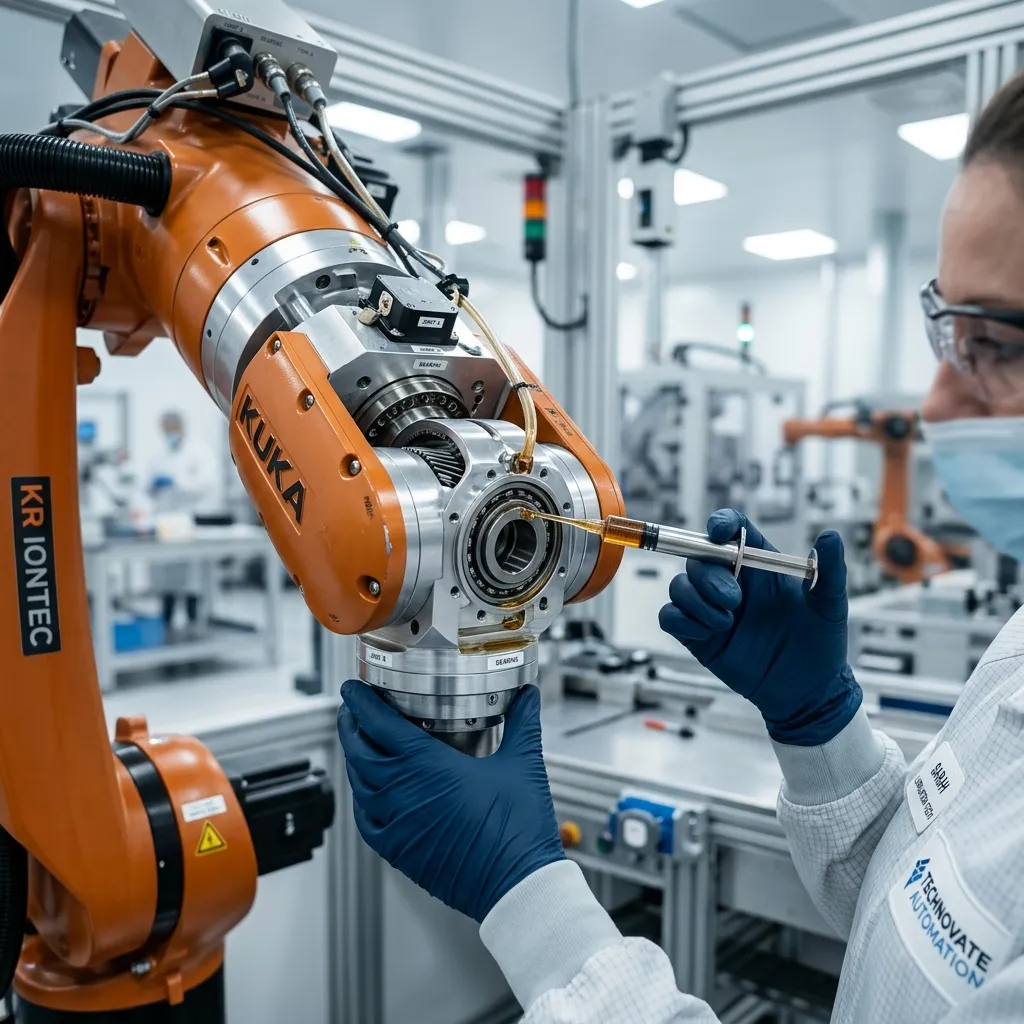
    The first line of defence against robot breakdowns is the daily walk-around inspection performed before the shift begins. Operators should look for signs of grease or oil leakage around the gearboxes, which indicates worn seal kits that must be replaced before the joint runs dry. Any visible damage to cable bundles or protective harnesses must be noted, as high-flex cables are prone to fatigue wear under rapid duty cycles.

    Furthermore, check for any unusual vibrations or audible noise during initial jogging routines. Ensure that the emergency stop buttons on the teach pendant and main enclosure operate correctly, and verify that all light curtains and safety scanner fields reset as expected. Running this five-minute daily checklist ensures that minor faults do not evolve into major production halts.

    Monthly and Quarterly Checks: Batteries and Backups

    Every industrial robot arm relies on back-up batteries inside both the controller cabinet and the arm base to store encoder data when power is switched off. If these batteries fail, the robot will lose its calibration (mastering), necessitating a time-consuming manual zeroing process that halts production. Testing battery charge status monthly and replacing them annually is a simple task that saves days of troubleshooting.

    During quarterly checks, inspect the fans and heat sinks inside the control cabinet to prevent overheating of servo amplifiers. Check the terminal connections for any loose wiring that could cause intermittent communication drops, and backup the current system image and program files to a secure server. Having an up-to-date program backup is essential for quick recovery in the event of a controller failure.

    Annual Service: Grease Replacements and Calibration

    The annual service is a comprehensive procedure that goes beyond superficial checks. It involves extracting grease samples from each joint's gearbox to check for metal particulates, which indicate gear wear. Over time, gears break down under load, and replacing old lubricant with fresh, manufacturer-specified oil or grease is essential to maintain structural reliability and repeatability.

    Additionally, check the tension of all drive belts inside the arm joints, adjust them to the manufacturer's exact specifications, and verify brake effectiveness on all axes. Run path repeatability tests using optical tracking systems to ensure the tool centre point remains calibrated to within tenths of a millimetre, confirming that the cell is ready for another year of high-speed floor operations.

    Evaluating automation for your plant?

    Ubuntu Robotics runs feasibility studies and cycle-time simulation before you commit.

    Discuss a project

    Categories & Tags

    Getting Startedrobot preventative maintenanceindustrial robot oil changerobotic arm lubrication schedulereducing factory downtime

    Frequently Asked Questions

    Related News

    View All Articles
    Choosing the Right Robot for Your Factory: Articulated, SCARA, or Delta?
    Robot Selection

    Choosing the Right Robot for Your Factory: Articulated, SCARA, or Delta?

    Ubuntu Robotics6 July 2026

    How to Budget an Industrial Robotics Project: Hidden Costs and ROI
    Cost & ROI

    How to Budget an Industrial Robotics Project: Hidden Costs and ROI

    Ubuntu Robotics6 July 2026

    Getting Your First Robotic Cell Into Production: A Step-by-Step Commissioning Checklist
    Getting Started

    Getting Your First Robotic Cell Into Production: A Step-by-Step Commissioning Checklist

    Ubuntu Robotics6 July 2026

    Introduction to 3D Vision Guided Bin Picking
    Vision & AI

    Introduction to 3D Vision Guided Bin Picking

    Risheek G8 July 2026

    Safety Standards for Collaborative Robot Integration
    Cost & ROI

    Safety Standards for Collaborative Robot Integration

    Risheek G8 July 2026

    Integrating Machine Vision in Robotic Assembly: 2D vs 3D Vision Systems
    Vision & AI

    Integrating Machine Vision in Robotic Assembly: 2D vs 3D Vision Systems

    Ubuntu Robotics10 July 2026

    Transitioning from Proprietary Robot Programming to ROS2: Benefits and Challenges
    Software & ROS2

    Transitioning from Proprietary Robot Programming to ROS2: Benefits and Challenges

    Ubuntu Robotics10 July 2026

    Implementing Digital Twins in Industrial Robotics: Simulation to Real-Time Monitoring
    Industry 4.0

    Implementing Digital Twins in Industrial Robotics: Simulation to Real-Time Monitoring

    Ubuntu Robotics10 July 2026

    Simulating Robotic Applications: Gazebo, Webots, and Vendor-Specific Simulators
    Software & ROS2

    Simulating Robotic Applications: Gazebo, Webots, and Vendor-Specific Simulators

    Ubanthu Robotics14 July 2026

    Selecting End Effectors: Vacuum Grippers, Mechanical Claws, and Magnetic Lifters
    Robot Selection

    Selecting End Effectors: Vacuum Grippers, Mechanical Claws, and Magnetic Lifters

    Ubanthu Robotics14 July 2026

    Designing a Robotic Cell for High-Mix Low-Volume (HMLV) Production
    Industry 4.0

    Designing a Robotic Cell for High-Mix Low-Volume (HMLV) Production

    Ubanthu Robotics14 July 2026

    PLC and HMI Integration in Robotic Cells: Architecture and Handshaking Protocols
    Software & ROS2

    PLC and HMI Integration in Robotic Cells: Architecture and Handshaking Protocols

    Ubanthu Robotics17 July 2026

    Tactile Feedback in Automation: Implementing Force-Torque Sensors in Robotic Assembly
    Vision & AI

    Tactile Feedback in Automation: Implementing Force-Torque Sensors in Robotic Assembly

    Ubanthu Robotics17 July 2026

    Robot Dresspack Design: Optimizing Cable Management for 6-Axis Manipulators
    Robot Selection

    Robot Dresspack Design: Optimizing Cable Management for 6-Axis Manipulators

    Ubanthu Robotics17 July 2026